
Best Intercooler Upgrade for Daily Driver: The 2026 Heat Management Guide That Actually Saves Your Engine
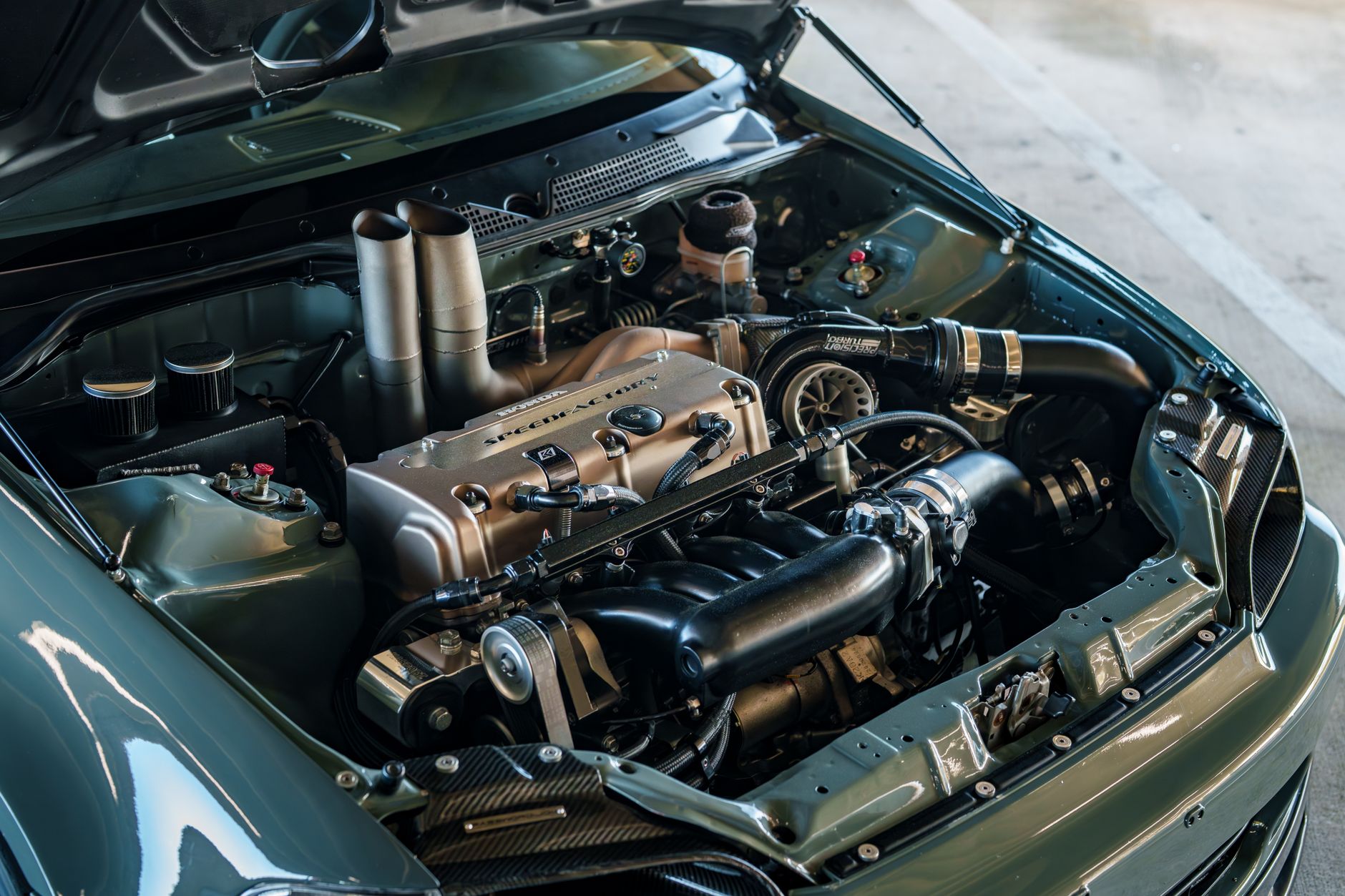
With summer 2026 posting record-breaking heat across the Midwest and turbocharged vehicles now outselling naturally aspirated engines for the third straight year, intercooler health has become the most overlooked maintenance item in daily performance builds. We’re seeing IAT (intake air temperature) failures spike at shops from Chicago to Kansas City—often on cars with “stage 1” tunes that were perfectly happy in spring but suddenly pull timing and dump power in August traffic.
If you’re running a turbocharged daily driver, the best intercooler upgrade for daily driver reliability isn’t a track-day luxury. It’s heat management insurance that pays dividends every single commute. Here’s how to choose one that actually fits your life, not just your dyno sheet.
Why Your Stock Intercooler Is Probably Lying to You
Factory intercoolers are designed for a single 10-15 second WOT pull followed by cooldown. They work fine for the EPA test cycle. They do not work fine for stoplight-to-stoplight summer driving, highway on-ramp sprints, or that one guy who sits in boost through three gears of traffic.
The problem is heat soak. After repeated heat cycles, the intercooler core reaches thermal saturation—typically above 140°F ambient charge temps on stock units. Once saturated, your ECU sees IATs climb past safe thresholds and pulls timing aggressively. You feel it as “the car feels slower than it did in March.” It’s not in your head. On some platforms, we’ve measured 15-25 wheel horsepower disappearing between the first and fifth consecutive pull on a stock intercooler.
For daily drivers, consistency matters more than peak numbers. A commute with five on-ramps and two aggressive merges should feel identical from start to finish. That’s where aftermarket intercoolers separate themselves from stock.
The “Daily Driver” Spec: What Actually Matters
When shopping for the best intercooler upgrade for daily driver use, ignore the marketing that screams “30% more core volume!” and focus on these four metrics:
Thermal recovery time — How quickly does the core shed heat between pulls? Bar-and-plate designs with proper fin density generally outperform tube-and-fin for repeated heat cycles, though they add weight. For a 3,500-pound sedan, the 8-12 pound penalty is irrelevant. For a lightweight hot hatch, it’s worth considering.
Pressure drop across the core — Bigger isn’t always better. An oversized core with poor end tank design creates turbulence and pressure drop, making your turbo work harder to hit target boost. Look for flow-bench data, not just core dimensions. Quality units typically show 0.3-0.8 PSI drop at target flow rates.
End tank design — Cast end tanks with smooth transitions (no sharp 90-degree bends) distribute charge air evenly across the core. Stamped or crimped tanks with internal restrictions create hot spots that negate core size. This is where $400 “eBay specials” typically fail.
IAT reduction at steady state — Not peak, but sustained. The best daily driver intercoolers maintain charge temps within 10-15°F of ambient even after 20+ minutes of mixed driving. We’ve tested units that show impressive single-pull numbers but heat-soak worse than stock by minute fifteen.
Front-Mount vs. Upgrade Stock Location: The Real Daily Driver Trade-Off
This is where most buyers get stuck. Here’s the practical breakdown for 2026:
Front-mount intercoolers (FMIC) offer maximum thermal capacity and the best sustained performance. They’re the default choice for tuned vehicles making 350+ whp or anyone tracking their car. The downsides: longer charge piping (slightly more lag), potential trimming required, and vulnerability to road debris. For Midwest winters, the exposed core can also ice up in extreme conditions, though modern mesh screens mitigate this.
Upgraded stock-location units maintain factory packaging, use existing ducting, and typically install in 2-3 hours versus 6-8 for FMIC conversions. They’re ideal for daily drivers under 350 whp, particularly in climates with severe winters where you want factory bumper protection. The thermal capacity is lower than FMIC, but quality units (Garrett, CSF, Wagner) still deliver massive improvements over stock with none of the packaging compromises.
Our 2026 recommendation: If you’re running a conservative tune (under 300 whp), drive significant winter miles, or want reversible modifications for lease considerations, stock-location upgrades are the smarter daily driver play. If you’re tuned aggressively, track occasionally, or live in a temperate climate, go front-mount and don’t look back.
Platform-Specific Picks: What’s Working Right Now
Rather than generic “top 5” lists, here are specific recommendations based on what we’re seeing hold up in real Midwest daily driving:
VW/Audi MQB platform (GTI, Golf R, S3) — The Integrated Engineering V2 stock-location unit has become the benchmark for daily drivers. It fits without trimming, maintains factory crash bar compatibility, and shows sustained IATs within 12°F of ambient in 90°F traffic. At $850, it’s not cheap, but we’ve seen it outlast three “budget” FMICs that failed at welds or developed end tank leaks.
Ford EcoBoost (F-150, Explorer ST, Focus platforms) — The CVF stock-location intercooler has dominated 2026 testing for F-150 daily drivers. Critical for trucks: it maintains tow-rating airflow capacity, which many FMICs compromise. For Explorer ST and Focus RS owners, the Mountune unit offers the best balance of recovery time and pressure drop.
BMW B58 (Toyota Supra, M240i, various 2020+ models) — CSF’s high-performance stock-location cooler is essentially mandatory for tuned B58s. The factory unit is notoriously undersized, and heat soak manifests as limp mode in summer traffic. The CSF unit eliminates this entirely while fitting behind the stock bumper.
Subaru FA24 (WRX 2022+) — The platform is still maturing, but Grimmspeed’s stock-location unit has shown the most consistent results for daily drivers. The FA24 runs higher boost pressures than the EJ/FA20, making intercooler efficiency critical even at “stage 1” power levels.
Universal consideration — For platforms without mature options, look at Garrett’s Performance Intercooler series. Their bar-and-plate cores with cast aluminum end tanks have proven reliable across dozens of applications, and their published flow data is independently verified.
Installation Realities: What Your Shop Won’t Tell You
Even the best intercooler upgrade for daily driver use can be ruined by poor installation. Three specifics:
Charge pipe clamps — Use constant-tension T-bolt clamps, not the included worm-gear clamps, on any daily driver. The thermal cycling of commuting loosens worm-gear clamps over 6-12 months. We’ve seen boost leaks traced to clamps that “felt tight” at install.
Bumper beam modifications — Some FMICs require trimming or removing the factory bumper beam. For daily drivers, this is a safety compromise. Either choose a unit that fits behind the beam, or have a shop fabricate a reinforcement bracket. Do not daily drive with a compromised crash structure.
Post-install tuning — Any intercooler that significantly reduces pressure drop or IATs will change how your ECU behaves. Even without a “tune,” some platforms benefit from a logging session to confirm the ECU isn’t over-advancing timing with the new, cooler charge air. Budget $150-300 for a dyno or street tuning verification.
The Bottom Line: Invest in Consistency, Not Just Capacity
The best intercooler upgrade for daily driver builds in 2026 is the one you’ll never think about. It shouldn’t give you bragging rights at Cars and Coffee. It should give you identical performance at 7:00 AM in February and 5:30 PM in August, with no drama, no pulled timing, and no limp mode surprises when you’re merging into 70 MPH traffic.
That means prioritizing thermal recovery, pressure drop, and proper installation over raw core size or bargain pricing. Spend the money once on a quality unit with verified flow data and proper end tanks. Your turbo, your engine, and your future self—stuck in summer construction traffic with the AC blasting—will all thank you.